
Pittsburgh Previous Resident Sources by Era
One Pittsburgh address leaves different kinds of evidence in different periods. Allegheny County's Department of Real Estate, or DRE, holds the Pittsburgh title and land-instrument sequence. Carnegie Library supplies verified Pittsburgh directory holdings with real gaps, while the State Archives maintains an early County grantee-index microfilm route. Federal census schedules record Pittsburgh households on a particular date. Hopkins map plates supply Pittsburgh lot, block, street, ward, and owner context. Use the source that fits the time period, then compare dates before treating a name as one of the previous residents.
| Source | Years it covers | Where held | What it shows |
|---|---|---|---|
| Pittsburgh DRE historic land records | To 1788 | Pittsburgh DRE public search and counter | Recorded title parties, instrument details, and legal descriptions. |
| Pittsburgh Allegheny grantee index | 1788 to 1904 | Pennsylvania State Archives microfilm | Early Pittsburgh reference trail for a recorded land party. |
| Pittsburgh directory holdings | 1813 to 1975, with listed gaps | Carnegie Library Pennsylvania Department | Dated Pittsburgh name, address, and occupation clues where an actual volume exists. |
| Pittsburgh federal population census | 1790 to 1950 | National Archives and repositories | Pittsburgh household snapshot for its census date. |
| Pittsburgh G. M. Hopkins maps | 1872 to 1940 | Historic Pittsburgh | Lot, block, street, ward, and same-era owner context. |
| Pittsburgh permit certificate download | Since June 2019 | OneStopPGH related permit record | Later Pittsburgh property milestone, not a full occupancy history. |
Begin with Pittsburgh DRE and County property records when the question is a recent transfer. Start with an actual Pittsburgh directory volume, map, census date, or State Archives index when the time period is much older. DRE documents date to 1788, but the research does not verify a universal online-image cutoff. A Pittsburgh screen result is not the end of the search when an older book, microfilm roll, library, or counter route is documented.
Tracing Pittsburgh's Previous Resident Deed Trail
The Pittsburgh deed trail starts with an address, but it should quickly shift to the County PIN and legal description. Enter the physical Pittsburgh address in the Allegheny County Property Portal, record the PIN, map-block-lot clues, sale and recording information, and distinguish the physical location from owner or tax mailing fields. The County warns that owner-history information can be incomplete and that a Homestead entry is not proof a person lives at the address. Pittsburgh DRE is the title-history source, not a residents roster.
- Find the physical Pittsburgh address and PIN in the Allegheny County Real Estate Portal.
- Record the Pittsburgh PIN, map-block-lot clues, sale or recording date, deed book and page when shown, and the distinction between physical and mailing fields.
- Search the Pittsburgh DRE advanced index by PIN, book and page, grantor or grantee, and a recorded date range.
- Read the Pittsburgh instrument's legal description and prior-deed reference rather than relying on the street number alone.
- Search the former seller as a Pittsburgh grantee to locate that party's earlier acquisition, then repeat the sequence backward.
- For older Pittsburgh material, verify the record through DRE's counter or the State Archives microfilm route instead of assuming the needed image is online.
- Grantor
- The party conveying an interest in a recorded instrument. A grantor is a document role, not proof of residence.
- Grantee
- The party receiving an interest in that instrument. Searching a former seller as grantee can locate an earlier purchase.
- Chain of title
- The sequence of recorded transfers used to trace an interest in the same land backward through time.
- Legal description
- The lot, plan, metes-and-bounds, ward, or prior-reference language that identifies the land more durably than an old street number.
Pittsburgh Previous Residents and Legal Descriptions
Pittsburgh deeds require a municipality, the City ward where applicable, and a Pittsburgh property description that uses either a lot with plan-book volume and page, full metes and bounds, or a prior-deed reference. Pittsburgh documents that refer to prior deeds identify the original book, volume, and page. These durable Pittsburgh links matter when a street number appears in a different historical form or when several Pittsburgh streets have similar names.
County Address Management maintains the central Pittsburgh address data used by 911, the Office of Property Assessments, and DRE. Municipalities assign and change Pittsburgh addresses, while the Postal Service does not assign a new address. Preserve the historical Pittsburgh address exactly as printed, then use the PIN, ward, plan, legal description, and official address documentation to bridge the old form to the present one. The research found no authoritative Citywide historical renumbering year, so no such date should be invented for a Pittsburgh address trail.
Note: A mapped parcel, owner mailing field, or document party is evidence for its own date and purpose, not a complete list of who lived there.
Pittsburgh Previous Residents and Grantee Indexes
The early Pittsburgh Allegheny grantee index is a bridge when a DRE chain reaches beyond ordinary online access. The State Archives inventory identifies Recorder deed-grantee index microfilm from 1788 through 1904, while Pittsburgh DRE historical documents date to 1788. The Pittsburgh archive route is useful for locating an early reference, but an index is not the same thing as a complete image collection. Check the Pittsburgh portal or counter by volume because no universally applicable online-image cutoff was verified.
Allegheny County was created on September 24, 1788, with Pittsburgh as County seat. The State Archives also identifies Pittsburgh County naturalization, docket, tax, and other specialist material, but these records should remain in their specific historical context. They are not interchangeable with a present-day Pittsburgh address record.
Allegheny County Historical Records is the source for the capture below.
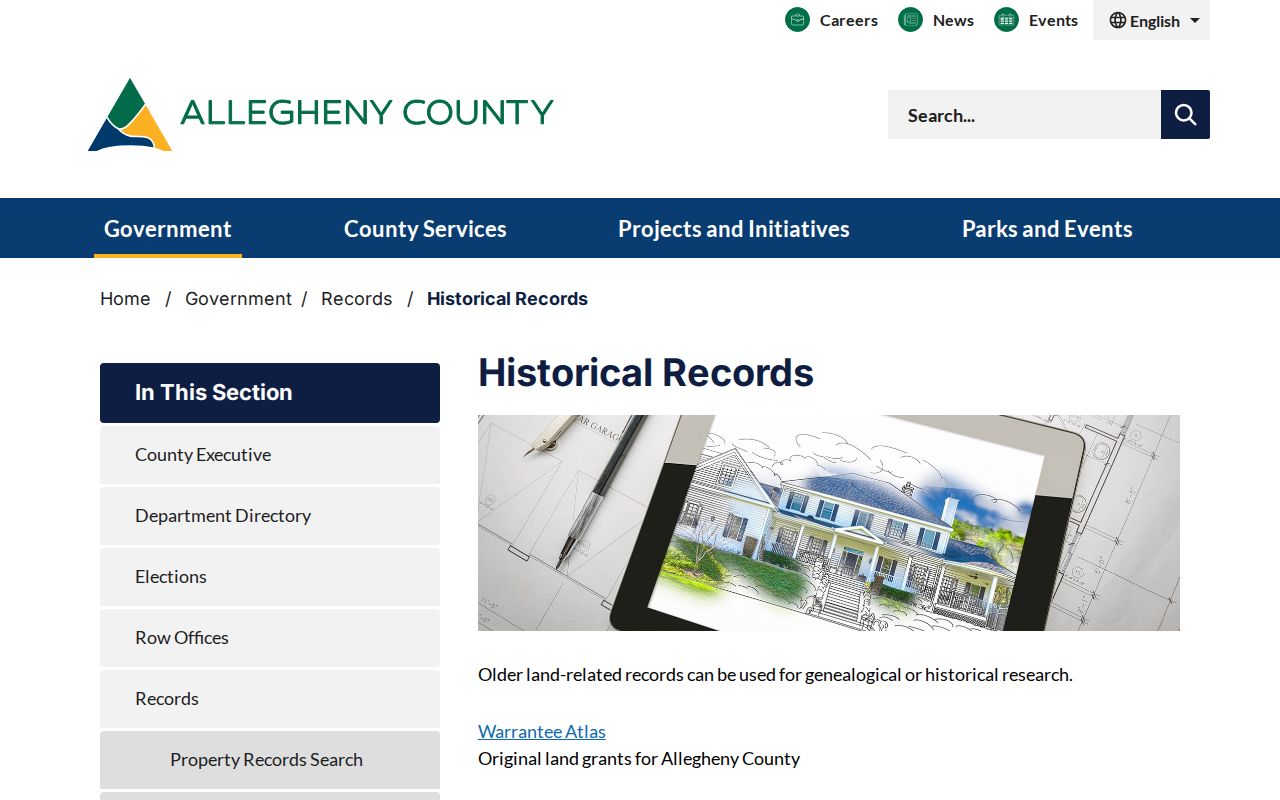
The County directs older Pittsburgh land-related records toward historical and genealogical research. Use that Pittsburgh access route with the State Archives index and DRE record details, not as a shortcut to a current-resident claim.
Pittsburgh Address Forms and Record Bridges
Pittsburgh Code Chapter 420 identifies the City Department of Innovation and Performance and the Addressing Review Committee as the City authorities for street naming and addresses. The City and County 911 CAD Geofile is the official street file. A change request can involve a site plan, parcel ID, surrounding streets, and main entrances, and an approved change may take up to 90 business days before it becomes effective. The owner must separately notify other parties after an address change.
This Pittsburgh geography issue is as much a records issue as an address issue. The same Pittsburgh place can appear with a historic street form, ward, plan, lot, PIN, and a later administrative address. Preserve all of them. Do not replace an old Pittsburgh form with a newer one in a transcription, and do not treat a postal label as the authority for a historical Pittsburgh address.
Pittsburgh Past Residents in Directories and Census
Title transfers identify recorded parties, but past residents often require a household layer. Carnegie Library's documented Pittsburgh directory holdings run from 1813 to 1975 with specific gaps. The National Archives makes census population schedules from 1790 through 1950 publicly available. Choose a real directory volume closest to the period, copy its name spelling, address, profession, and printed qualifier, then compare the nearest actual volumes on either side. Pair those dates with a census snapshot and the deed chronology.
- Find a verified Pittsburgh directory volume nearest the target period.
- Copy the address, spelling, initial, profession, and printed qualifier without modernizing it.
- Check the closest available earlier and later volumes, and record any missing years.
- Compare the directory date with the nearest census date, ward, map plate, and deed event.
- Use an obituary, probate, or library request only as a dated follow-up, not as a substitute for the address trail.
The collection details belong with the Pittsburgh city directory volumes; this address trail uses them as dated evidence rather than rebuilding the collection shelf. No verified Pittsburgh reverse or criss-cross directory year run was found. Ask Carnegie staff about a specific year before expecting an address-order volume.
National Archives census guidance is the source for the capture below.
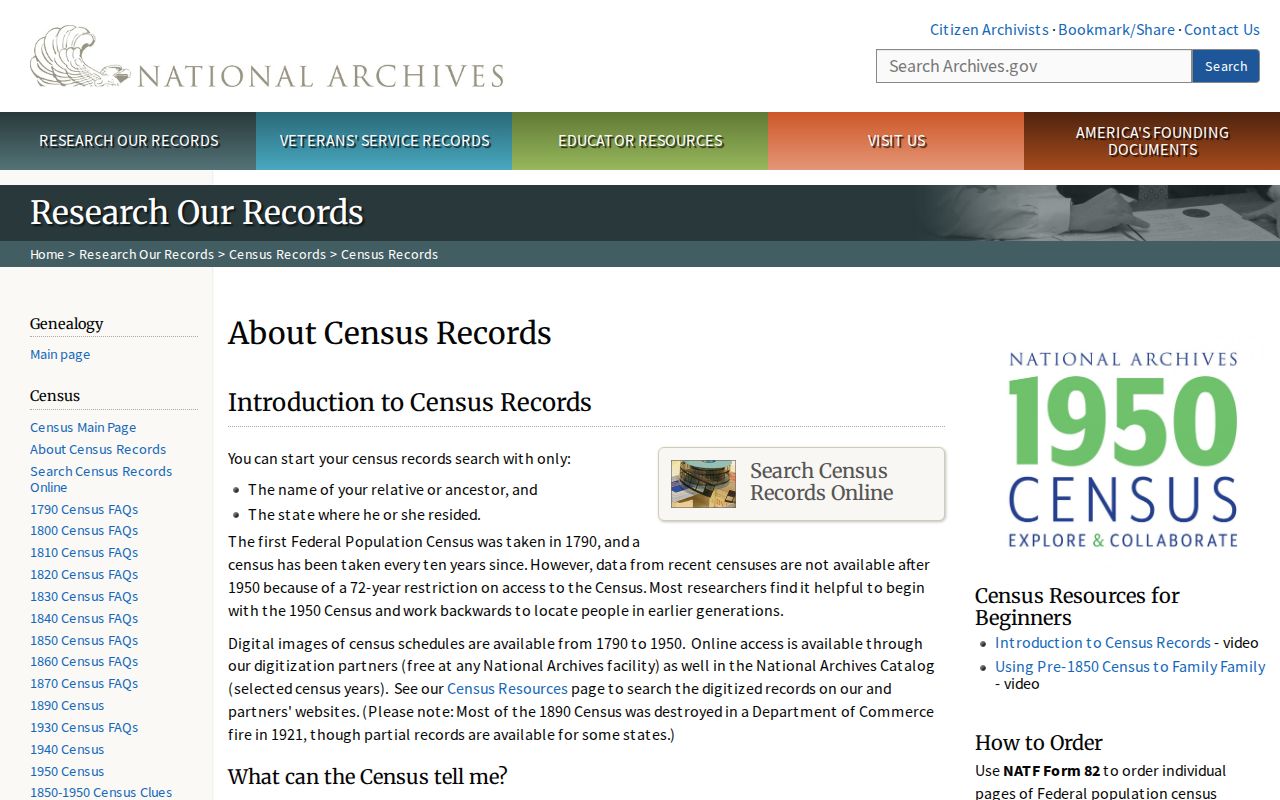
The National Archives describes census availability and the 72-year access rule. A census household is a dated snapshot, so it should be read beside the directory and deed dates.
Pittsburgh Previous Residents on Hopkins Maps
Historic Pittsburgh's G. M. Hopkins collection covers 1872 through 1940 in 47 volumes and more than 1,800 plates. A same-era plate can show lot and block numbers, street names and widths, property-owner names, churches, cemeteries, schools, mills, railroads, and water features. Pair a dated directory address with the matching plate and ward clue, then compare it to the legal description. Never transpose a later deed party onto an older map.
Historic Pittsburgh's Hopkins property-map collection is the source for the capture below.
The captured collection access point may require ordinary browser verification. The map's own date, plate, ward, and lot context are what make it useful beside a directory or deed.
Pittsburgh Address Permit Milestones
OneStopPGH Insights provides a later administrative trail for planning, zoning, construction, street, code-enforcement, and condemned-building records. It supports address or record-number search and filters for neighborhood, ward, Council district, ZIP code, and record type. Its Building view can search by address, neighborhood, or ZIP and narrow results by permit number, status, and type. A listed applicant, inspector, or license holder has a role in a dated record, not proof of a household.
In July 2026, the City announced a Permit Tracker with project stage, required and completed inspections, inspection summaries, assigned contacts, and direct downloads of Certificates of Occupancy from related OneStop records for certificates since June 2019. It is a useful recent milestone, not a complete history of everyone at the address.
Pittsburgh Past Residents and Estate Leads
When an address trail reaches a death or estate event, use the appropriate custodian. Allegheny Wills and Orphans accepts a Will Search Request Form that asks for the decedent's name and death date, together with requester contact details. The mail search is $10 by money order and is nonrefundable whether a record is found or not. It is a focused probate lead, not a promise of every heir or address. The office is at 414 Grant Street, first floor, with a counter route as well.
For Pennsylvania birth and death records from 1906, the Department of Health route has statutory access rules. Birth records become public after 105 years and death records after 50 years under 35 P.S. §450.801. Carnegie's local obituary and death-notice form adds Pittsburgh and Allegheny County index periods of 1786 through 1913, 1963 through 1998, and 2001 to the present, with an estimated four-to-six-week response. Use the oldest appropriate access channel, then keep the result tied to its date.
Lawful use. Pittsburgh house-history and family-history research should stay focused on records and dates. Do not use an old address trail to track, harass, or harm a living person.
Pittsburgh Previous Resident Access Beyond the Web
Older research does not end when an index does not return an image. DRE offers public search, counter, and documented mail paths. The State Archives holds the grantee-index microfilm and provides catalog, Digital Archives, and research-request channels for material it holds. Carnegie Library supplies directory and obituary research forms, while the City Archives catalog and digital collections can add historical public-works or planning context. Each channel has a separate scope, and none turns a missing online result into proof that a person never lived at an address.
When a public agency holds an existing administrative record outside a court file, Pennsylvania's Right-to-Know Law may offer a request path. The law generally calls for a response within five business days, subject to documented exceptions and extensions. Use a specific request to the agency that holds the record. Court files, vital records, voter material, and protected addresses follow separate rules, so send those requests to their actual custodians instead.
Note: Keep a PIN, legal description, source date, document reference, and repository name with every link in the backward trail.